
From observation to insights
In my design research practice, I work with qualitative and quantitative data to move beyond description toward insight. I use a reflective progression - what I observed, how I interpret it, and why it is relevant - to make sense of patterns in research material and articulate meaningful insights. Rather than treating this as a rigid framework, I use it to make my reasoning explicit and open to discussion. Recommendations follow as a separate step, grounded in clearly articulated insights and refined through iteration and testing.

Latest insights and reflections
Dive into narratives that bridge research, design, and human experience



Supply Journey Mapping – Ambev Tech

Working with Ambev Tech, I led a comprehensive supply chain journey mapping project to transform how brewery operators experience digital tools and processes. The challenge was addressing high cognitive load, fragmented communication via WhatsApp and paper notes, low data reliability, and inconsistent digital tools across operations while mapping complex workflows to identify the highest-impact improvement opportunities.I conducted immersive research with 35+ operators across different brewery areas, combining stakeholder mapping, system visualization, field observation, and co-creation workshops. The methodology followed Discovery, Connect, and Construct phases, progressing from understanding current workflows to identifying nine prioritized Game Changers based on frequency, time impact, cognitive load, and reliability, then defining the ideal future system through collaborative ideation generating 41 concepts.Deliverables included detailed journey blueprints for each operator profile and area, nine prioritized Game Changers with quantified impact on cognitive load and efficiency, an ideal future system map showing integrated information flows, design and usability principles (Project Drivers) to guide product development, and a Book of Ideas with eight detailed solution concepts addressing critical pain points like communication fragmentation and manual data entry, providing a concrete roadmap for reducing cognitive burden and improving process reliability.
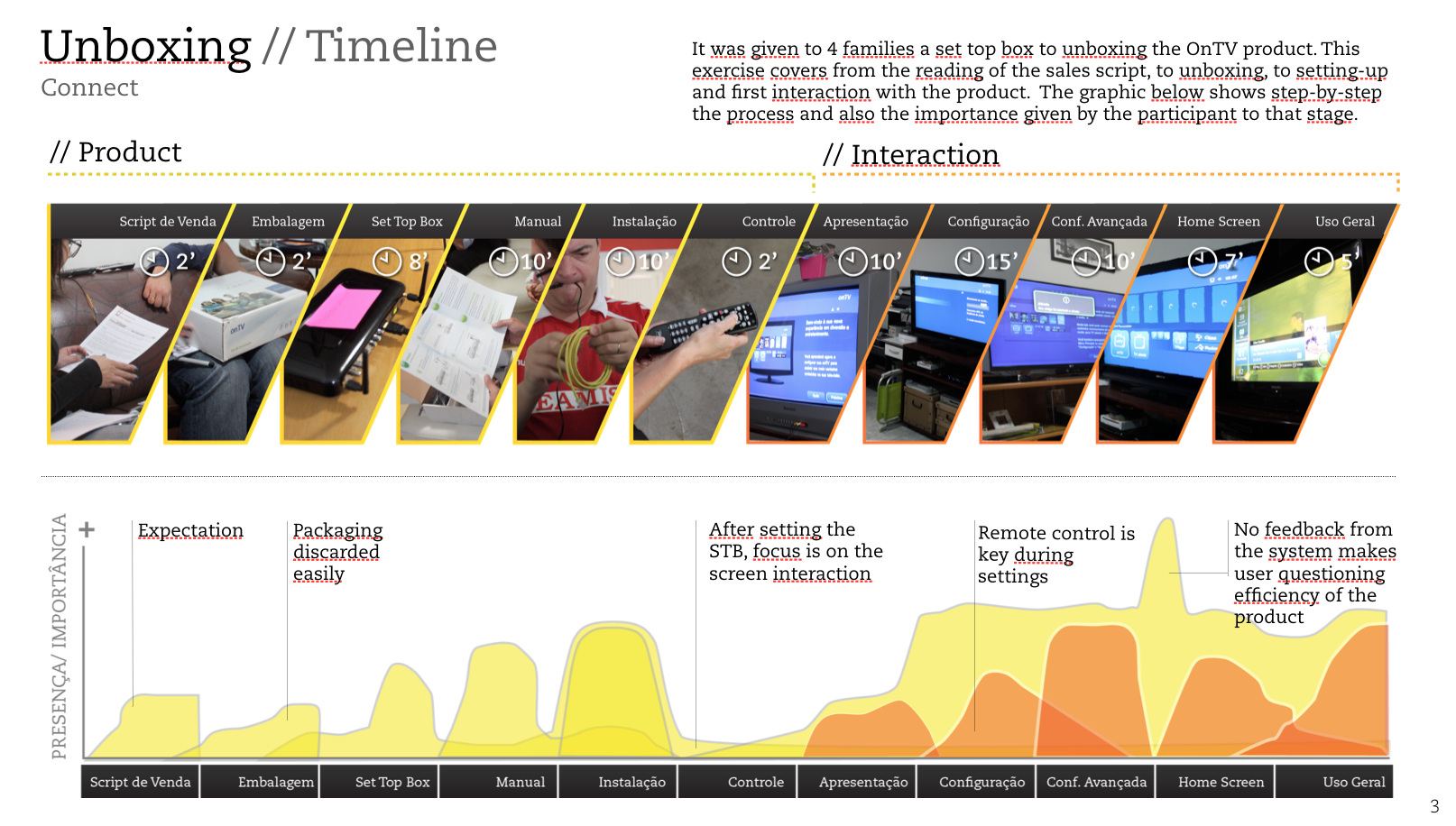
On TV
Working with Telefonica, I conducted mixed methods research for OnTV, their streaming television service, to clarify quantitative performance data and identify improvement opportunities. The challenge was understanding the story behind the metrics and uncovering actionable insights for service enhancement.I combined qualitative research methods with quantitative data analysis to develop a comprehensive picture of user behavior, preferences, and pain points. The approach integrated user interviews, behavioral analysis, and performance metric interpretation to identify patterns and opportunities.Deliverables included comprehensive research findings documenting user experience patterns, visual analysis of key engagement metrics, identification of friction points in the user journey, and prioritized recommendations for service improvements that would drive increased user satisfaction and engagement with the OnTV platform.
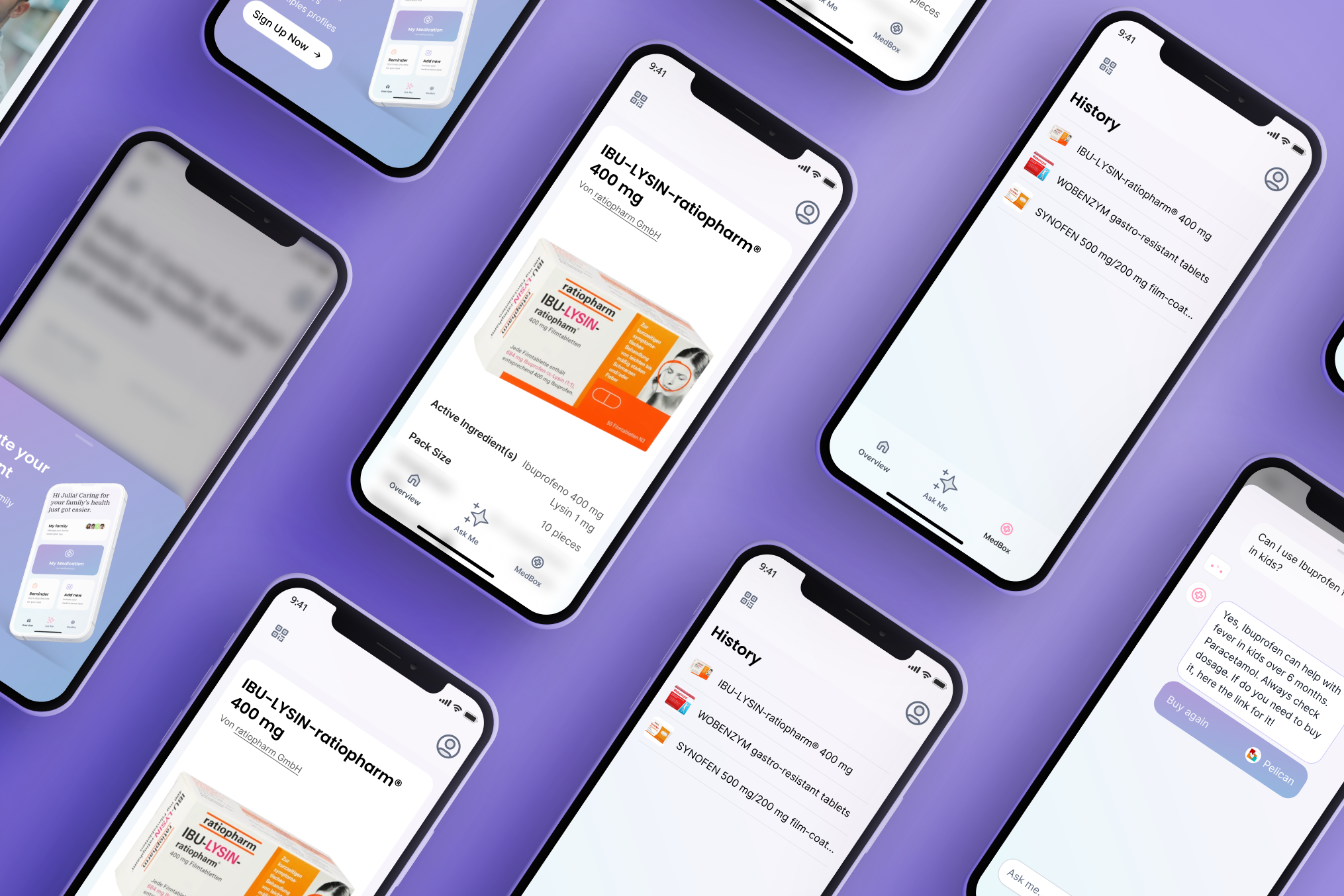
MedKai
Working with Shio Investments, I led UX research for MedKai, an AI-powered AppClip designed to help users organize, track, and access reliable medication information. The challenge was embedding user needs into an accelerated product development timeline, transforming an investment concept into a functional digital health product at fast pace.I conducted user research to define personas and map user behaviors, developing information architecture and navigation flows aligned with real-world medication management needs. The approach balanced speed with user-centricity, ensuring the platform remained intuitive and accessible despite compressed timelines.Deliverables included detailed user personas capturing target audience needs, complete information architecture defining app structure and flows, MVP wireframes and interface designs, visual identity including characters and branding elements, and a design system providing clear specifications for development of a seamless, trustworthy medication management experience.

Clinical trials community engagement
Working with Wellcome Trust, Quicksand, and the REACH Network , I helped strengthen the design and implementation of clinical trials for snakebites and epidemic diseases. The work applied people-centered design to improve participant engagement, trust, and trial effectiveness in LMIC contexts where trials faced participant mistrust, cultural barriers, and logistical constraints.I conducted field research in Brazil including stakeholder interviews and site visits to understand lived experiences of people affected by Zika and snakebites, identifying barriers and opportunities for people-centered clinical trials. Through workshops, I co-created and validated engagement approaches to improve communication, ethics, support, and participation.Deliverables included Brazil field research outputs and synthesis plus workshop-driven recommendations and a validated set of public-engagement prototype concepts to improve transparency, support, and trust in clinical trial participation for snakebite and epidemic disease research, with recommendations applicable across multiple geographies.
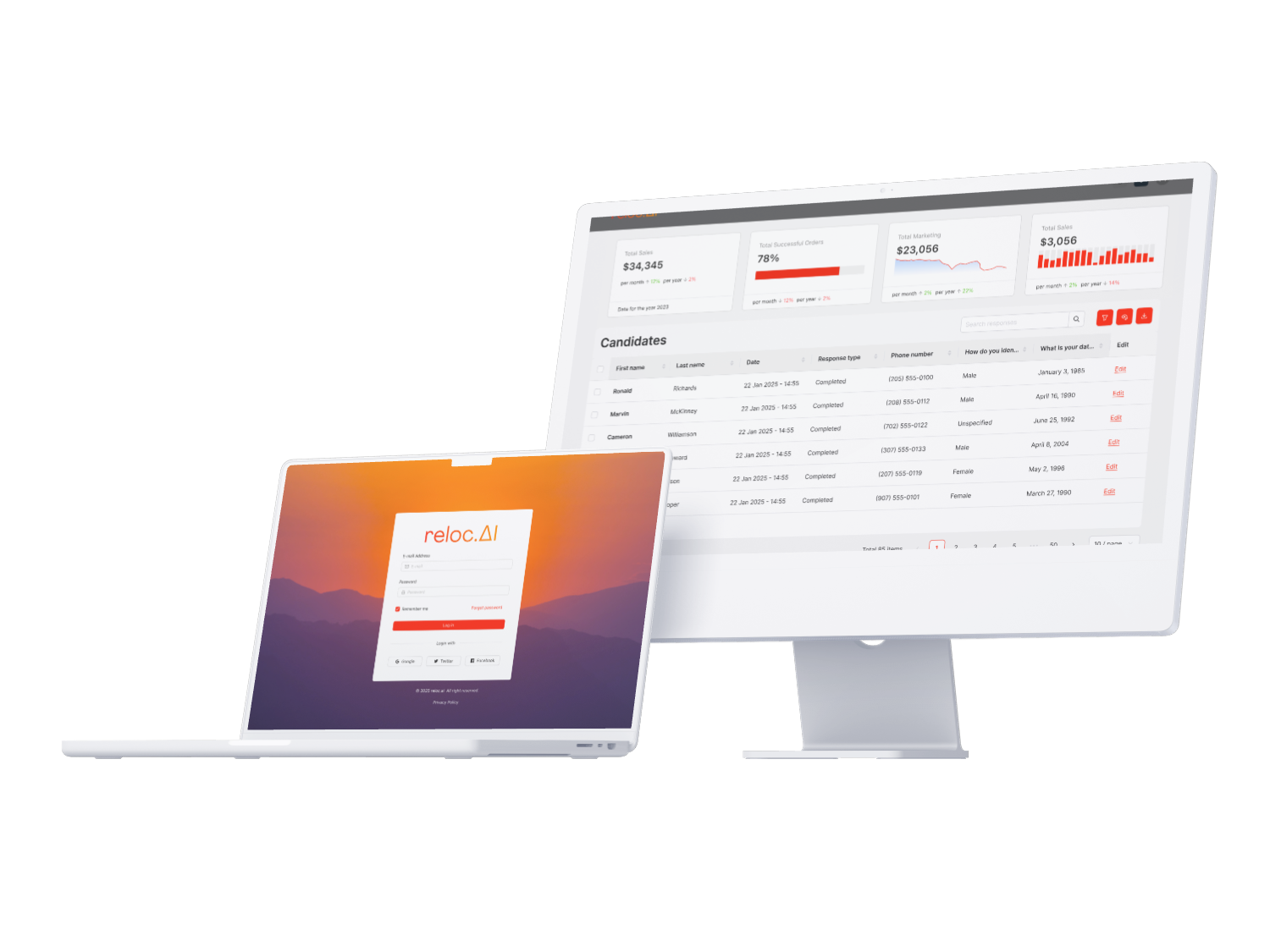
relocAI Global Mobility Platform
With Flutter Innovation, I worked with http://reloc.ai to define the product and experience design for a digital global mobility platform combining AI-assisted relocation guidance with employer services. The challenge was designing a seamless relocation experience across multiple user groups (candidates, employers, service providers) and translating a complex, multi-stakeholder service into a clear, scalable digital product.I conducted benchmarking and user research, created journey maps and service blueprinting to identify friction points and information needs, and developed information architecture direction. Based on partner requirements, I designed recruiter-facing candidate intake and management flows optimized for efficiency and reuse of candidate information.Deliverables included benchmark inputs, personas and moodboards, a relocation service blueprint, initial information architecture direction, and recruiter-facing candidate intake form plus management views to support structured candidate onboarding at scale.

Emprego Ligado Job Search App
In collaboration with Emprego Ligado in Brazil, Camila led a research-driven mobile redesign to strengthen trust and engagement within a job-search platform serving low-income young adults across Classes C and D. Most users were in their early twenties, navigating their first formal employment experiences within a sensitive unemployment context.
The challenge was addressing low trust in digital job-search communication alongside limited technological fluency. Through competitive benchmarking and ethnographic research, she mapped the end-to-end journey and identified critical barriers to clarity, credibility, and usability.
Co-creation workshops and persona development translated insights into a new user experience grounded in simplicity, respect, and human tone. Fast prototyping and iterative validation enabled the introduction of clearer flows, supportive microinteractions, and light gamification elements designed to encourage progression, confidence, and sustained engagement.
The outcome repositioned the platform from a transactional job board to a trusted digital companion during moments of professional uncertainty.
Deliverables included research synthesis, journey maps, persona archetypes, six strategic insights, and a defined product direction supported by functional prototypes, wireframes, and core screen concepts ready for validation and implementation.
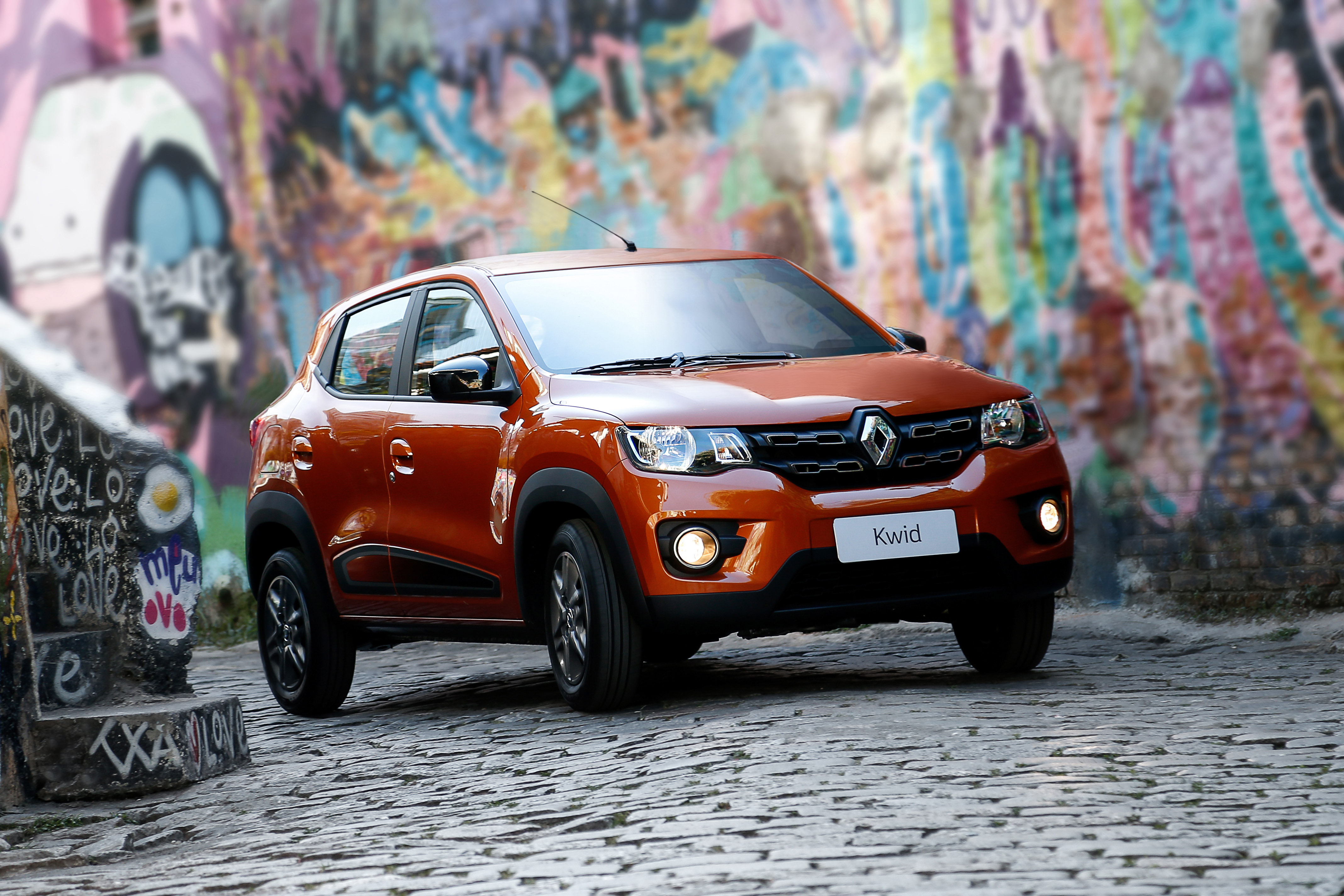
Automotive industry design research in Brazil
This strategic research initiative for Renault focused on building deep market and consumer understanding in Brazil as a foundation for future innovation. The research was framed, synthesized, and translated into clear, actionable strategic directions for the organization.
Guided by the Feel the Future® methodology, the project combined ethnographic observation, in depth interviews, and expert dialogue to identify patterns, tensions, and emerging behaviors across multiple cities. Convergences and divergences across data sources were synthesized into robust insights and future oriented trends. Workshops and co creation sessions transformed these findings into structured opportunity areas and a coherent strategic narrative to support executive decision making.
The work strengthened Renault’s understanding of Brazilian consumer priorities in the entry level automotive segment and informed strategic discussions that later materialized in products such as the Renault Kwid. Launched in Brazil in 2017, the Kwid became one of the country’s most relevant compact vehicles, surpassing 500,000 units sold and consistently ranking among national sales leaders.
Key deliverables included a comprehensive research synthesis, Brazil specific trends and critical tensions, clearly articulated opportunity areas, and an executive level presentation designed to support cross functional alignment and future scenario development.
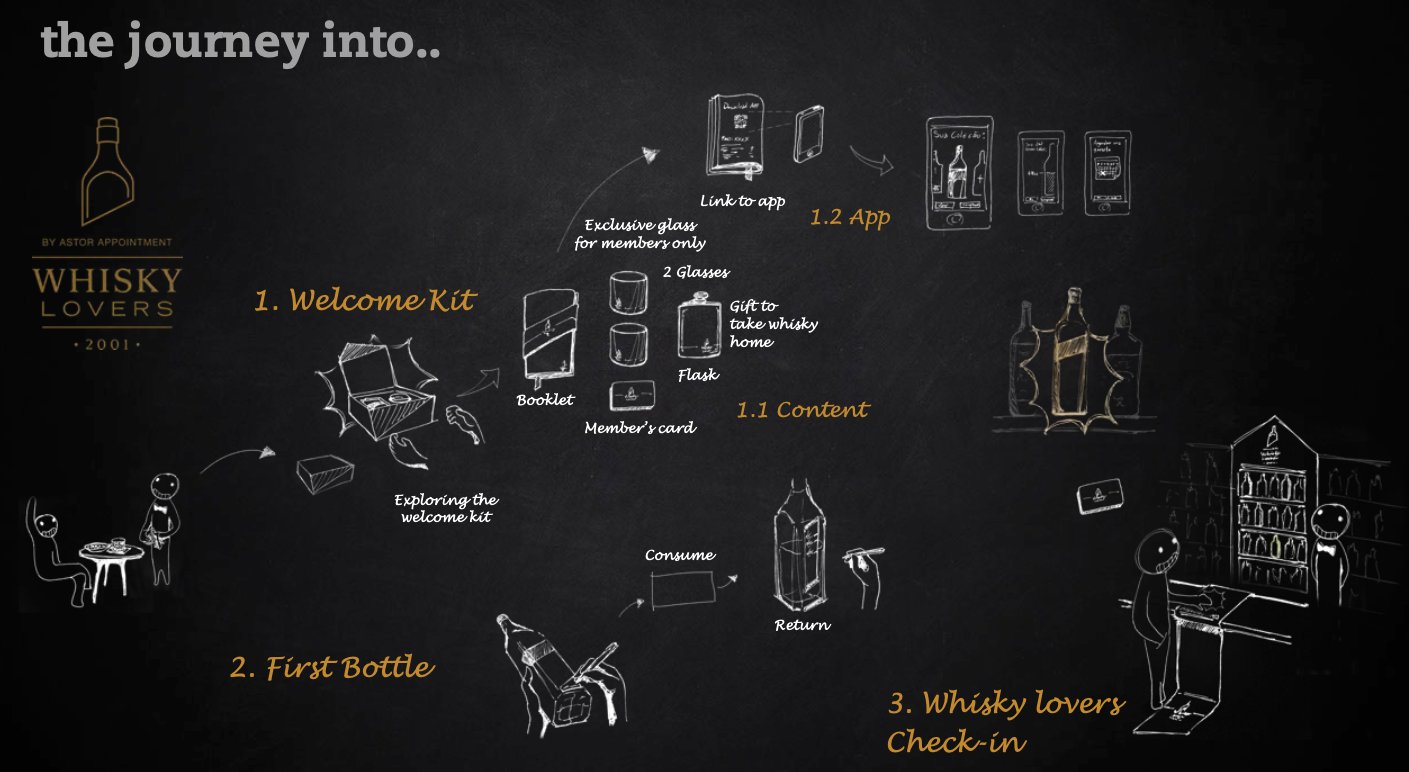
Whisky Lovers Experience for Diageo
This project was a two-part innovation program for Diageo, developed with Johnnie Walker, focused on understanding the end-to-end journey of whisky drinkers and identifying new opportunities for uptrade.
The work began with design research including shadowing, interviews, safaris, and observation, informing the mapping of different consumption journeys and revealing opportunities to rethink how whisky is discovered and shared.
One stream explored exclusive experiences for whisky enthusiasts in flagship locations, while the second addressed uptrade at scale through an experience framework for a broader range of on-trade venues, balancing accessibility with brand equity.
Insights were translated into concrete experience concepts and execution-ready artefacts, creating a research-backed foundation for activating whisky experiences across both flagship and scalable on-trade contexts.